Disability · NDIS registered provider 4050003922
ZigZag
A neurodiverse-friendly day program for people with behaviour support needs.
A large, calm space with never more than 10 people at a time. Our own Behaviour Support Practitioner is part of the team, and nurses support the people who need high intensity supports.

At a glance
ZigZag, in short
-
What it is
A small day program for people who are neurodivergent or have behaviour support needs. Cooking, music, community outings and a lot of laughing, in a space designed to stay calm.
-
Who it is for
People with an NDIS (National Disability Insurance Scheme) plan who do best with a small group, a predictable day, and workers who know their behaviour support plan.
-
How it is paid for
Through the Core budget in your NDIS plan, as group and centre-based activities. Where your plan funds high intensity supports, those sit alongside.
-
How to start
Come and see the space first. Call 02 9556 9500 or send us a message, and we will arrange a visit at a quiet time.
The space
Built to stay calm, however the day goes.
Most group programs are loud, crowded and unpredictable, and for a lot of neurodivergent people that is the whole problem. ZigZag is deliberately the opposite: a large space shared by a small number of people, with a routine you can see in advance and the noise, light and pace kept low.
- 10 people at most, at any one time
- BSP our own Behaviour Support Practitioner
- RN nurses for high intensity supports
-
Never more than 10
A small group in a big room. There is always space to move away from something without having to leave.
-
Somewhere quieter
A calmer corner for when the main room is too much, and no need to explain why you want it.
-
A day you can see coming
The routine is visual and set in advance. If something has to change, you hear about it before it happens, not after.
-
Low noise, low glare, low pressure
We keep the things that tip a day over, sound, bright light, crowding and rushing, as low as we can.
Behaviour support
Your plan, your practitioner, our whole team.
We have our own Behaviour Support Practitioner, and you do not have to use them. Many people come to ZigZag with a practitioner they and their family already trust, and we work with that practitioner. Whoever writes your plan, every worker on your day is trained in it and uses the same strategies, so what works at home works here too.
-
How we put a plan into practice
Your behaviour support plan is not a document in a drawer. Workers learn it before they support you, including how to help you settle when a day gets hard, and use it the same way every day. They record what is happening so your practitioner, and with your consent your family, can see what is working and change what is not.
-
Restrictive practices
Restrictive practices are not something we offer, and we work to have fewer of them. If one is ever in someone’s plan, it is authorised, used only as a last resort, reported to the NDIS Quality and Safeguards Commission every month, and paired with a plan to stop needing it.
Health and nursing
Nurses for the people who need high intensity supports.
Some people need daily care that takes specific clinical training, what the NDIS calls high intensity supports. Our nurses make sure that care is safe at ZigZag.
-
What high intensity supports are
Daily support that needs specific clinical training, such as tube feeding, tracheostomy care, seizure support, complex bowel care, catheter care, and eating and drinking safely with dysphagia.
-
What our nurses do
They work with your doctor and specialists on your health support plan, train and assess the workers who support you, and review how it is going. The people helping you day to day know exactly what to do, and when to call for help.
-
Eating and drinking safely
If swallowing is hard, your mealtime management plan comes with you. Food is prepared to the textures in it, and a trained worker is with you while you eat.
High intensity supports are provided where they are in your NDIS plan and covered by our registration.

A day at ZigZag
Cooking, music, community outings and a lot of laughing.
The day has a shape, and you choose what you do inside it. Some people cook lunch for the group. Some make the music, and some would rather listen. Some head out into Rozelle with a worker, and some stay put.
Nobody is made to join in, and nobody is left out. Quiet time is part of the day, not a sign that something has gone wrong.
- Cooking, and sharing lunch together
- Music, art and making things
- Community outings, in small groups
- Everyday skills, at your pace
- Time in the garden
- Quiet time, whenever you need it
Getting started
Come and see it first.
-
Tell us about the person
Who they are, what a good day looks like, and what tends to go wrong. If there is a behaviour support plan or a health plan, we read it before anything else.
-
Visit, more than once if you like
See the space at a quiet time, meet the workers, and stay for as long or as short as you want.
-
We get ready
Workers are trained in your plan before your first day. If you need high intensity supports, our nurse sets up your health plan and trains the team first.
-
Start small, then build
Short days first, and a review after the first few weeks. You set the pace.
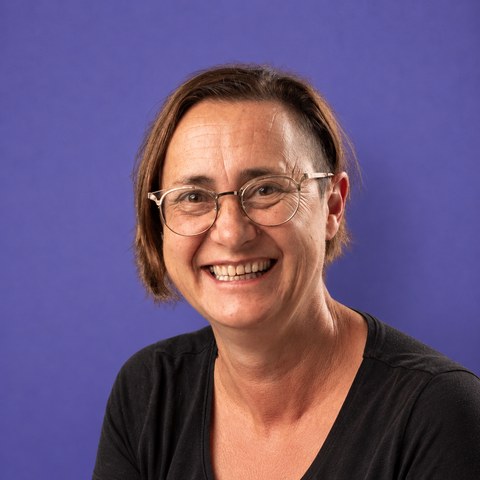
Aisling Scully
Complex Care Lead. AASW Social Worker, Registered Behaviour Support Practitioner
Aisling and the ZigZag team take the first call, and will either get you started or pass you to the right person. Call any weekday, 9am to 5pm.
We would be glad to show you around.
Whether you are looking for yourself, for someone you care for, or for a participant you coordinate, come and see the space before you decide anything.
Prefer Easy Read? Here is our Easy Read page. Need Auslan or an interpreter? Tell us and we will arrange it.
Accessibility
We want this website to work for you.
If anything is hard to read or unclear, email accessibility@